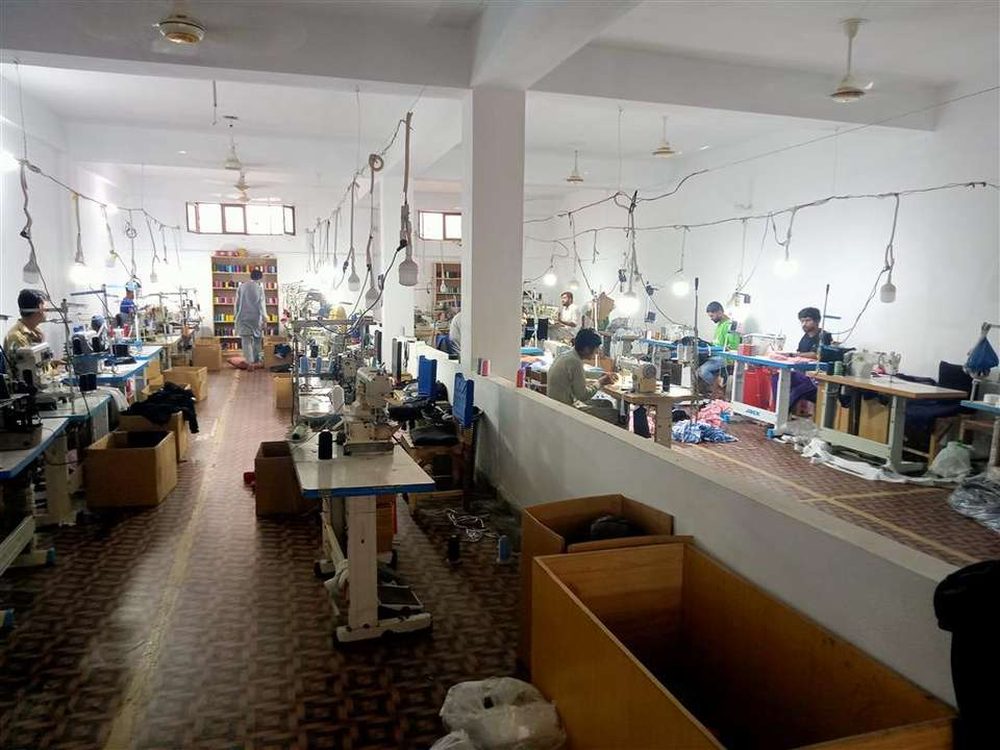
What does MOQ mean in clothing?
MOQ (minimum order quantity) is the smallest number of pieces a factory will make in one order. Many large overseas factories set it at several hundred pieces per style, sometimes per colour. For a new brand, a gym, a club or a small shop, that means a lot of cash locked in stock before you know what sells.
A low MOQ clothing manufacturer is set up to run small batches profitably. That lets you test designs, launch a capsule collection or restock fast without buying a warehouse of inventory. At KITFORGE the MOQ is typically 10–30 pieces per style, depending on the product and decoration.
Why factories set minimums
Every order carries fixed work that does not change much with quantity:
- Pattern making and grading across all sizes.
- Sampling and approval before bulk.
- Fabric buying, since mills sell fabric by the roll and dye in lots.
- Set-up for cutting, sewing lines, print screens, embroidery files and sublimation layouts.
Spread over 1,000 pieces, that work adds a few cents each. Spread over 20 pieces, it is a large share of the price. Factories with high minimums are simply protecting that maths. Low MOQ factories accept a smaller run and price it fairly.
How MOQ is counted: per style, colour or size
Two factories can both say “MOQ 50” and mean very different things. Always ask exactly what the number applies to.
| MOQ type | What it means | Example |
|---|---|---|
| Per style | Minimum for one design, any mix of sizes | 30 hoodies, split S–XXL |
| Per colour | Minimum for each colourway of a style | 30 black + 30 grey hoodies |
| Per size | Minimum for each size of each style | 10 per size, 50+ in total |
| Per order | Minimum for the whole order, across styles | 100 pieces mixed across 4 styles |
Per-style minimums that let you split across sizes are the most flexible for small brands. At KITFORGE sizes run from 4XS to 5XL, so one style's quantity can cover your full size run.
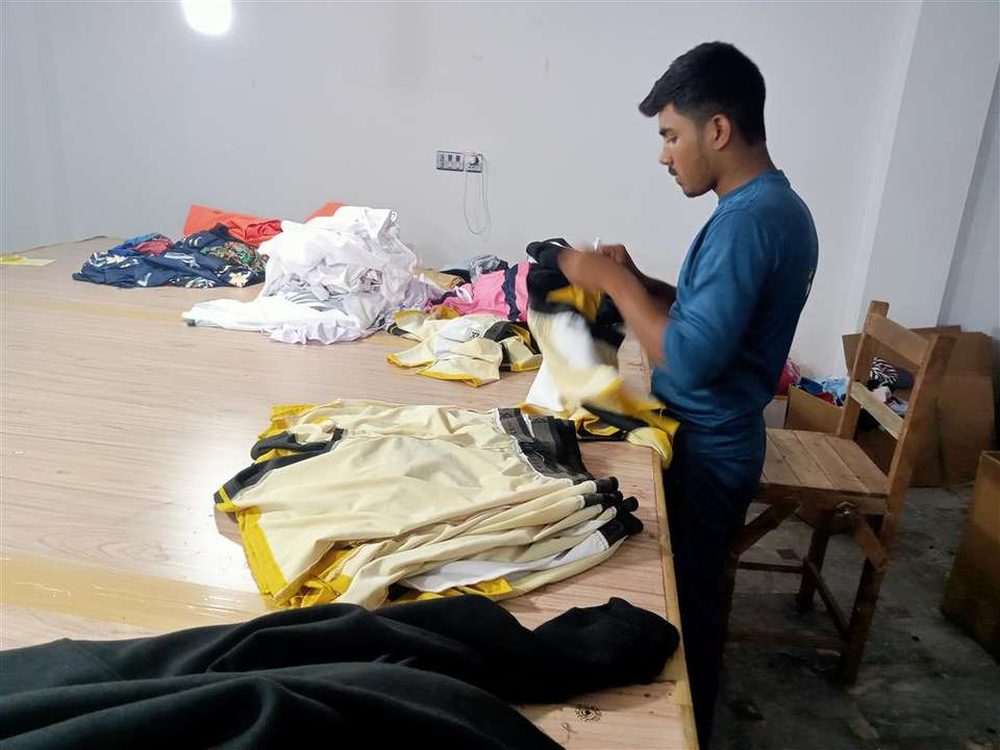
What pushes your MOQ up or down
- Custom fabric or dye. A special colour dyed to your Pantone often needs a full fabric lot. Choosing from the factory's available fabrics keeps minimums low.
- Decoration method. Sublimation and DTF printing have little set-up per design, so they suit small runs. Screen printing needs a screen per colour, and embroidery needs a digitised file, which add cost on very small runs. Our guide to DTF vs screen printing covers this in detail.
- Custom trims. Branded zips, woven labels, hangtags and custom buttons often have their own supplier minimums.
- Number of colourways. Five colours of one style is five small runs. Start with one or two core colours.
- Complexity. Many panels, special seams or bonded construction take longer to set up.
Small batch vs bulk: the cost trade-off
Expect a higher price per piece on a small run, because set-up work is shared across fewer garments. But compare the total cash at risk, not just the unit price. Thirty pieces at a higher price can cost far less in total than 500 pieces at a lower one, and you are not stuck with unsold stock if a design misses.
The common path is simple: launch small, see what sells, and reorder the winners in larger quantities at a better unit price. A good manufacturer keeps your approved sample and specs on file, so reorders match the first run.
How to order a small batch, step by step
- Define the product. Send a tech pack, sketch or reference garment, or pick a base style from a catalogue. Not sure what to include? Read what is a tech pack.
- Get a quote. Share the style, fabric, decoration, quantity and size split. Ask what the MOQ applies to and what is included.
- Approve a sample. A pre-production sample confirms fit, fabric, colour and print before bulk. At KITFORGE sampling typically takes 7–10 days.
- Confirm bulk. Lead time for production is confirmed with your quote. Our payment terms are 50% deposit and 50% before dispatch, by international bank transfer.
- Ship. Small orders usually travel by courier (DHL, FedEx or UPS); larger ones can go by sea freight. Ask for DDP (delivered duty paid) if you want duties handled to your door, and check our guide to HS codes for clothing so your invoice is right.
How to choose a low MOQ clothing manufacturer
- Clear minimums. They state the MOQ in writing and what it applies to.
- Sample before bulk. Never skip a physical sample, even on a small order.
- In-house processes. A factory that does cut & sew, sublimation, embroidery and printing under one roof can run small orders without juggling subcontractors.
- Service model that fits you. OEM (your design), ODM (they help develop it) or private label (their base, your brand).
- Fast, clear replies. If questions take a week to answer before you pay, production will be harder.
- Transparent shipping. Courier or sea options, and DDP if you want a landed price.
Building a gym or yoga line? Our guide to private label activewear manufacturing covers fabrics and launch planning. For hoodies, tees and sets, see custom streetwear manufacturing. Sourcing from Pakistan? See our guide to clothing manufacturers in Pakistan.
Start with a small batch
KITFORGE makes custom streetwear, activewear, team uniforms and jackets from our factory in Sialkot, Pakistan, with an MOQ of typically 10–30 pieces per style. Browse 260+ styles in our catalogue and send your idea. We reply within 24 hours.
Frequently asked questions
What does MOQ mean in clothing manufacturing?
MOQ stands for minimum order quantity: the smallest number of pieces a factory will produce in one order. It is usually counted per style, and sometimes per colour or per fabric.
What is a low MOQ for clothing?
Many overseas factories ask for several hundred pieces per style. A low MOQ manufacturer will produce small runs, often in the tens of pieces per style. At KITFORGE the MOQ is typically 10 to 30 pieces per style.
Is the price per piece higher on small orders?
Usually, yes. Set-up work such as patterns, sampling, screens and machine changeovers is spread over fewer pieces, so the unit price is higher than on a bulk run. The total cash you tie up in stock is much lower, which is why small orders suit new brands.
Can I mix sizes within the minimum order?
In most cases yes. The minimum is normally counted per style, and you can split it across sizes. At KITFORGE sizes run from 4XS to 5XL, so you can share one style's quantity across your full size range.
Ordering for a club instead? Read what sublimated uniforms are.