What is inside a hoodie?
Almost every hoodie is made from a loop-back knit. The outside (the face) is smooth, like a T-shirt, and the back is covered in small yarn loops. What happens to those loops decides the inside material:
- Brushed fleece: the loops are brushed until they open into a soft, fluffy pile. It traps air, so it is the warmest and cosiest option. This is the “classic” hoodie inside.
- French terry: the loops are left as they are. It feels lighter, breathes better and dries faster, so it suits spring hoodies, gym wear and warmer climates.
- Sherpa or thermal lining: a separate lining sewn inside the body or hood for extra warmth. It adds cost and bulk, so it is mostly used on winter styles.
If you turn a hoodie inside out and see a soft fuzz, it is fleece. If you see rows of neat little loops, it is French terry.
Hoodie fabrics compared
The fibre blend changes the feel, how the hoodie washes and which print methods work on it. These are the common options:
| Fabric | Feel | Watch out for | Best for |
|---|---|---|---|
| 100% cotton fleece | Soft, natural, breathable | Can shrink unless pre-shrunk; slower to dry | Premium streetwear and fashion hoodies |
| 80/20 cotton-polyester | Close to cotton, slightly smoother | Small amount of pilling over time | Brand hoodies that need a cotton feel and good shape |
| 60/40 or 50/50 blend | Lighter, smoother | Less “natural” feel than cotton-rich fabric | Merch, clubs, everyday hoodies at a lower cost |
| 100% polyester | Light, slick, quick-drying | Less breathable; can hold odour | Sublimated all-over prints, team and gym hoodies |
| Blends with spandex | Stretchy, close fit | Costs more; needs careful washing | Fitted gym and training hoodies |
There is no single “best” on the list. A cotton-rich blend wins for most brands because it balances comfort, durability and price, but the right answer depends on how the hoodie will be worn and printed.

Fabric weight (GSM) explained
GSM means grams per square metre. In the US, fabric weight is often given in ounces per square yard; 1 oz is about 34 GSM, so a 10 oz fleece is roughly 340 GSM. Heavier fabric feels warmer, hangs better and looks more premium, but costs more and takes more cloth per piece.
| Weight | Approx. GSM | How it feels | Typical use |
|---|---|---|---|
| Lightweight | 240–300 | Thin, easy to layer | Gym hoodies, warm climates, French terry styles |
| Midweight | 300–380 | Warm but not bulky | Everyday and team hoodies |
| Heavyweight | 380–500+ | Thick, structured, premium | Oversized streetwear and winter hoodies |
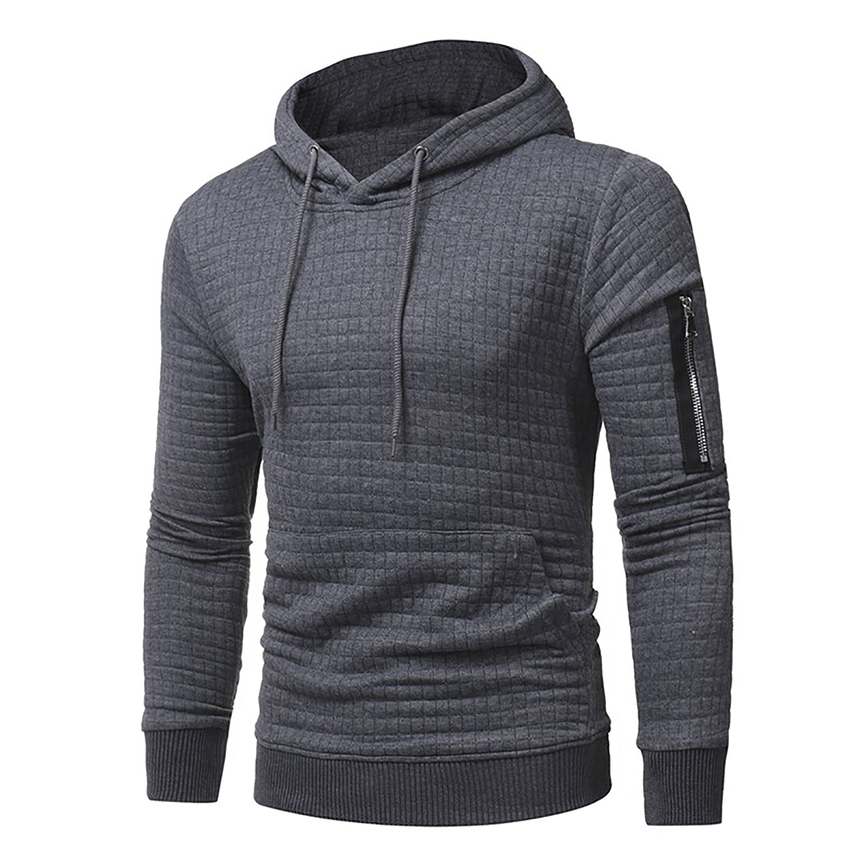
As an example, one of the fitness hoodies in our catalogue uses a cotton-polyester fleece at 10 oz (340 GSM), a midweight that works for training and casual wear.
Matching fabric to your print or embroidery
Choose the fabric and the decoration together, because not every method works on every fibre:
- Sublimation needs polyester (ideally white or light). It dyes the fibre itself, so all-over prints never crack. It does not work on cotton. See our guide to sublimated uniforms.
- Screen printing and DTF work on cotton, blends and polyester. Compare them in DTF vs screen printing.
- Embroidery looks best on midweight or heavier fleece, which supports the stitches without puckering.
Which fabric for which hoodie
- Streetwear and oversized hoodies: heavyweight cotton or 80/20 fleece, 400 GSM or more, with a boxy cut and drop shoulders. Browse our custom hoodies.
- Gym and training hoodies: lighter poly-cotton, polyester or a stretch blend, often in French terry, so it breathes and dries fast. See custom gym hoodies.
- Team, club and event hoodies: 100% polyester for full sublimation, or a 50/50 blend with a screen-printed or embroidered logo.
- Merch on a budget: midweight 60/40 or 50/50 fleece. It washes well and keeps the price per piece down.
The same thinking applies to crewnecks: see our custom sweatshirts.
How to specify hoodie fabric to a factory
“Good quality cotton” is not enough for a quote. Give the factory these details:
- Fibre blend: e.g. 80% cotton / 20% polyester.
- Knit and inside: brushed fleece or French terry.
- Weight: GSM (or oz) of the body fabric.
- Trims: rib for cuffs and hem (usually a cotton-spandex rib), drawcord, eyelets, zip if needed.
- Finish: pre-shrunk, anti-pill, garment-dyed or enzyme-washed if you want a softer, vintage hand.
- Colour: Pantone reference for dyed fabric.
Put it all in your tech pack, then feel the fabric on a physical sample before you approve bulk. At KITFORGE we make a pre-production sample first, which typically takes 7–10 days, and we confirm the bulk lead time with your quote.
Make custom hoodies under your own label
We make custom hoodies, gym hoodies and sweatshirts in fleece, French terry and polyester, with screen printing, DTF, embroidery or sublimation. MOQ is typically 10–30 pieces per style, sizes 4XS–5XL. See our streetwear range; we reply within 24 hours with pricing.
Frequently asked questions
What is the soft material inside a hoodie called?
The soft, fuzzy inside of most hoodies is called fleece, or brushed fleece. It starts as a loop-back knit whose loops are brushed so they open up into a soft, warm pile. If the inside shows small neat loops instead, the fabric is French terry.
Is 100% cotton or a cotton-polyester blend better for hoodies?
100% cotton feels the most natural and breathes well, but it can shrink and takes longer to dry. A cotton-rich blend such as 80/20 or 60/40 cotton-polyester keeps most of the cotton feel while shrinking less and holding its shape better, which is why it is the most common choice.
What GSM is good for a hoodie?
Around 300–380 GSM is a comfortable midweight for everyday hoodies. Lighter fabric (about 240–300 GSM) suits gym and layering hoodies, while premium streetwear hoodies often use 400 GSM or more for a heavy, structured feel.
Why do some hoodies pill, and how can I prevent it?
Pilling happens when short fibres on the surface rub, tangle and form small balls. Brushed fleece and polyester-heavy blends are more prone to it. Choosing combed or ring-spun cotton, a tighter knit and an anti-pill finish helps, as does washing hoodies inside out on a gentle cycle.
Starting a clothing line? Read how to order small batches with a low MOQ and our guide to private label manufacturing.