1. Check your league rules first
Before you open a design tool, read the uniform section of your league's rulebook. School, college and amateur leagues often set rules on which numbers are allowed, the minimum height of numbers on the front and back, and how much the number colour must contrast with the jersey. Many also limit the size of manufacturer logos and require all players to wear the same colour undershirts and shorts.
It is much cheaper to get this right on paper than to reprint a full set. Save a screenshot of the rules and send it to your manufacturer with your artwork.
2. Choose the jersey and short style
Most basketball uniforms are a sleeveless jersey and a pair of loose shorts, but there are still choices to make:
| Option | What it is | Best for |
|---|---|---|
| V-neck or round neck | The collar shape, often with a contrast trim | Style choice; V-neck is the classic look |
| Standard or wide armholes | How much room around the shoulders | Wider cuts for comfort and movement |
| Single-layer jersey | One colour and design per jersey | Game uniforms; lighter and cooler |
| Reversible jersey | Two layers, a different colour on each side | Practice, camps and leagues that need two colours |
| Short length | Usually measured as inseam | Match the look your players prefer and your league allows |
Decide early whether you need home and away sets. Many leagues ask the home team to wear light jerseys and the visitors dark, so two single-layer sets or one reversible set may be required.
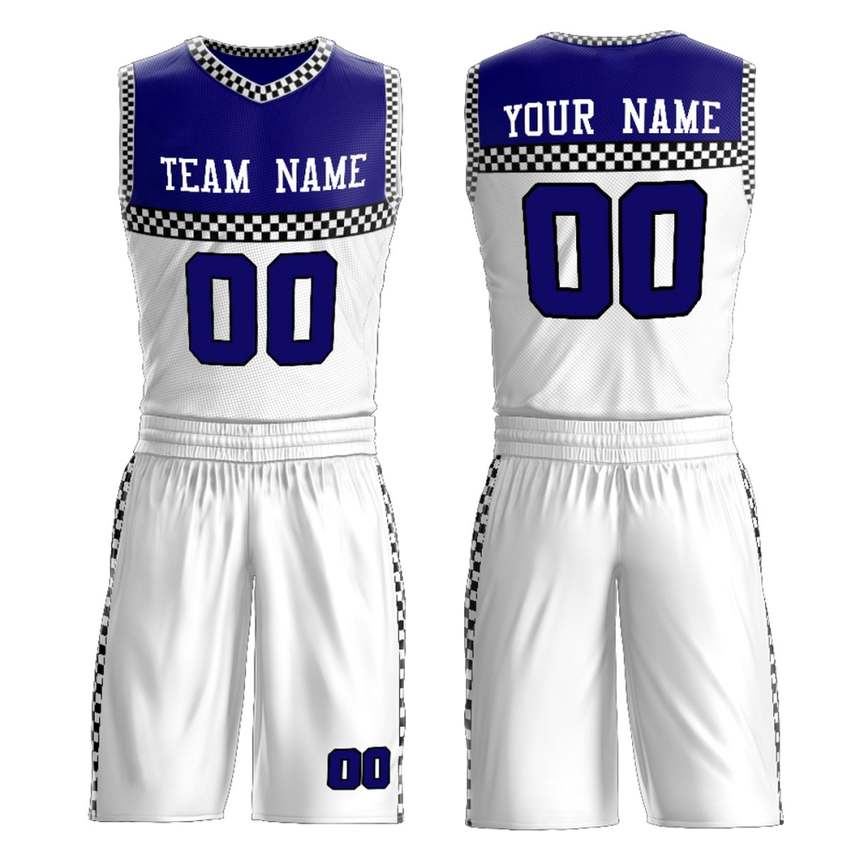
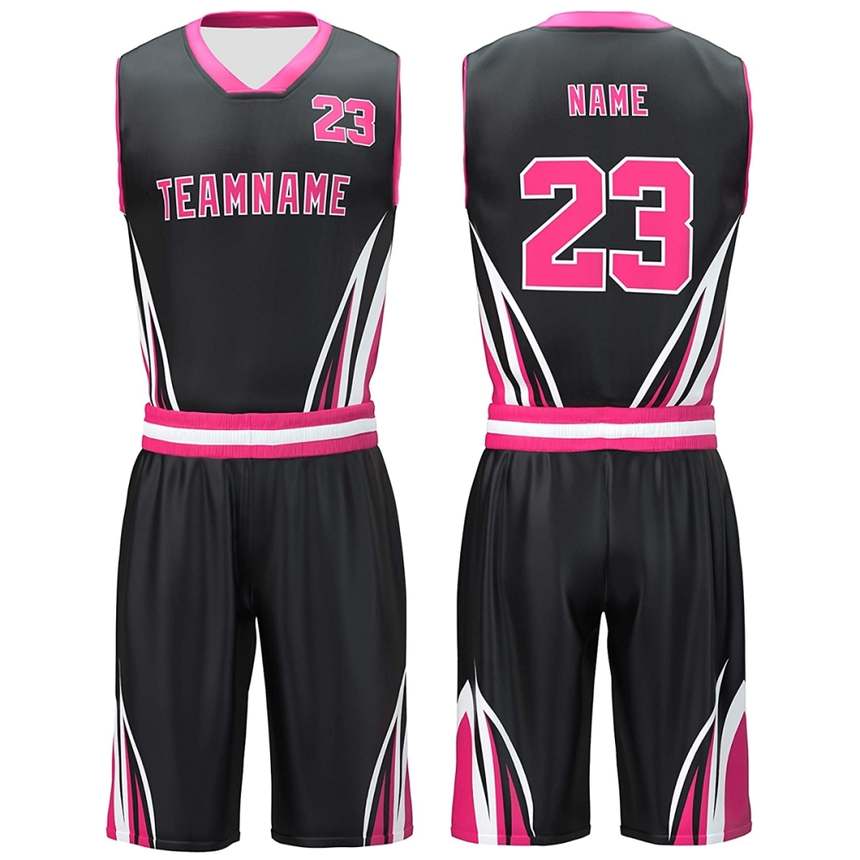
3. Pick the right fabric
Basketball is fast and hot, so the fabric matters as much as the design. Look for a lightweight, moisture-wicking polyester. Common choices are:
- Mesh with small holes for airflow. Very breathable, the traditional choice for jerseys.
- Interlock or smooth knit. A tighter surface that shows fine print detail well.
- Stretch blends with a little spandex for shorts or fitted jerseys.
Ask your manufacturer for the fabric weight (GSM) and, if possible, a swatch or sample before you commit. Polyester is also what makes sublimation possible, which opens up the design options below. To compare flatback, pinhole and other options, see our guide to the types of mesh fabric.
4. Colours, patterns and logos
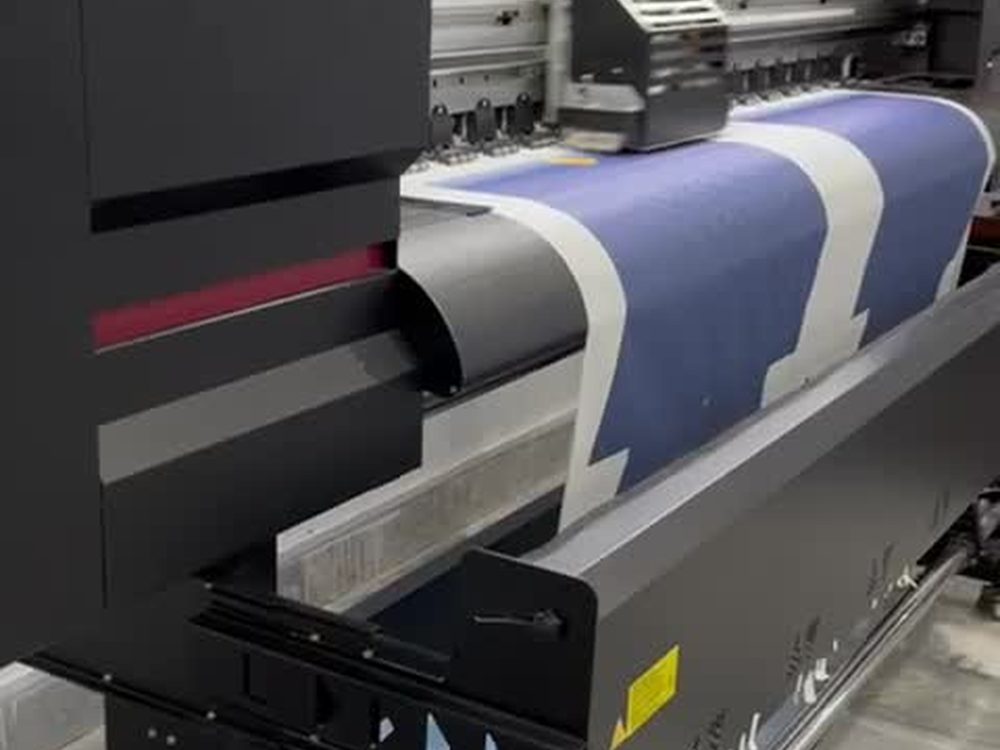
Most custom basketball uniforms today are dye-sublimated: the whole design is dyed into the fabric, so you can use any number of colours, gradients and all-over patterns without extra cost per colour, and nothing cracks or peels. If you are new to the method, read our guide on what sublimated uniforms are.
A few design tips that work on court:
- Use two or three main colours. School or club colours plus one accent reads clearly from the stands.
- Keep numbers on a calm background. Busy patterns behind numbers make them hard for referees to read.
- Use side panels and trims for movement and style, and keep the chest for the team name or crest.
- Send vector logos (AI, EPS, SVG or PDF) so crests and sponsor marks print sharp.
- Match the shorts. Repeat a stripe or pattern from the jersey so the set looks like one design.
5. Names and numbers
With sublimation, every player's name and number is printed as part of the jersey, not added later. That keeps them light and permanent, but it means the roster must be final before production. Choose:
- A number font that is bold and simple. Block and athletic fonts are easiest to read.
- Number placement on the front and back, plus an optional number on the shorts.
- Player names across the upper back, or leave them off for a cleaner look and easier reuse.
- Outline colours that keep the number clear against the jersey colour, as your league requires.
6. Sizing and the roster sheet
Size mistakes are the most common problem with team orders. Ask for the manufacturer's size chart with chest and length measurements, and if possible order a sample in the most common size to check the fit. At KITFORGE we make sizes from 4XS to 5XL, so youth, women's and men's squads can be covered in one order.
Then build one roster sheet with a row per player: name, number, jersey size and short size. Check it twice for duplicate numbers and spelling, and add a couple of spare sets without names for new players.
7. From design to delivery
- Send your brief. A sketch, reference photos or finished artwork, plus colours, logos and quantities.
- Approve the mock-up. Your design is placed on the real jersey and short patterns for every size.
- Check a sample. We make a pre-production sample before bulk, typically in 7–10 days, so you can confirm colours, fabric and fit.
- Bulk production. Printing, cutting, sewing and piece-by-piece checks. Lead time is confirmed with your quote.
- Shipping. By DHL, FedEx, UPS or sea freight, with DDP door-to-door delivery available so there are no surprise import charges.
Our minimum is typically 10–30 pieces per style, so a single team can order. Payment is 50% deposit and 50% before dispatch by international bank transfer. Ordering outerwear for the squad too? See our guide to custom team jackets.
Design your team's basketball uniforms with us
Browse our custom team uniforms or see basketball styles in the catalogue of 260+ products. Send your design or idea and we reply within 24 hours.
Frequently asked questions
Can I design my own basketball uniforms?
Yes. You can send a sketch, a reference photo or finished artwork. A manufacturer turns it into a digital mock-up on the real jersey and short patterns, and you approve it before a sample is made.
What is the best fabric for basketball jerseys?
A breathable, moisture-wicking polyester, usually a mesh or lightweight interlock knit. Polyester is also needed for sublimation, which lets you print any colours and patterns into the fabric.
Are reversible basketball uniforms a good idea?
They suit practice squads, camps and leagues that need two colours on one jersey. They are heavier and warmer than single-layer jerseys, so most competitive teams choose separate home and away sets.
How many uniforms do I need to order?
At KITFORGE the minimum is typically 10 to 30 pieces per style, which covers most team rosters. Add a few spare sets for new players and replacements.
Writing specs for your own apparel line? Read what a tech pack is and how to write one.